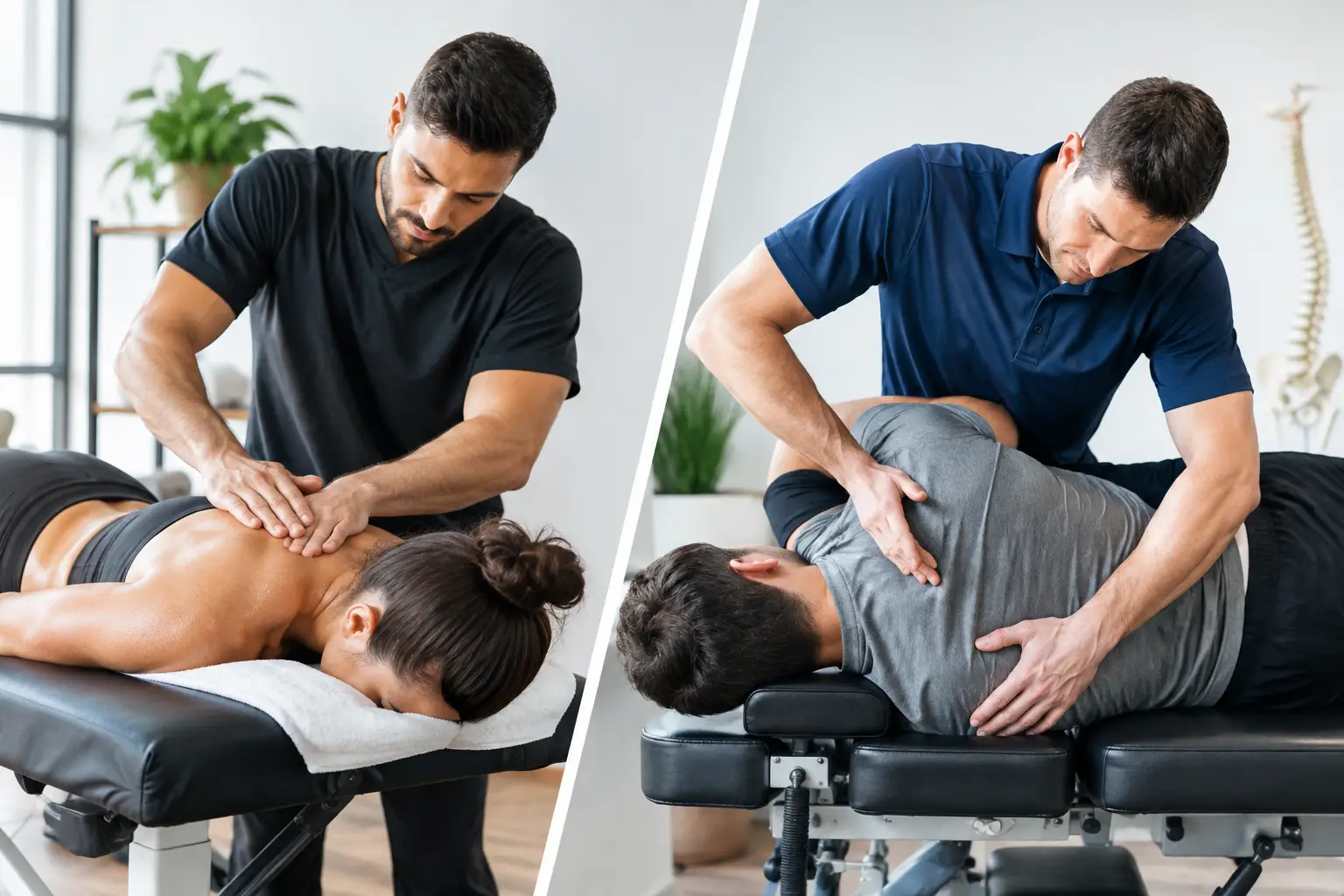
A runner feels a hamstring tighten halfway through a training block. A lifter cannot get comfortable at the bottom of a squat. A tennis player has recurring neck stiffness after serving. The question is rarely whether they need recovery. It is which type of care will actually help them move, train, and compete better. Sports massage vs chiropractic care is not a contest with one universal winner. The right choice depends on the problem, the goal, and what happens after the appointment.
For active adults, the most useful care should do more than temporarily change how a sore area feels. It should support better movement, clearer training decisions, and a body that can handle repeated stress.
Sports Massage vs Chiropractic Care: The Core Difference
Sports massage is hands-on soft-tissue work designed around the demands of training and sport. A session may include deep tissue techniques, myofascial work, assisted stretching, PNF stretching, cupping, and targeted work for overworked or restricted muscle groups. The goal is to reduce unnecessary tension, improve usable range of motion, and help the athlete recover without losing sight of the next workout, race, or game.
Chiropractic care focuses primarily on the spine, joints, and nervous system. Depending on the provider, treatment may include spinal or extremity manipulation, mobilization, soft-tissue therapy, exercise recommendations, and posture or movement education. Some athletes seek chiropractic care when they feel joint stiffness, back or neck pain, or a sense that a joint is not moving normally.
There is overlap. A chiropractor may use soft-tissue techniques and prescribe rehab exercises. A sports massage therapist may assess movement restrictions that affect a joint and use stretching or mobility work to improve how the area functions. The distinction is usually in the primary lens: sports massage starts with the condition of the soft tissue and its role in movement, while chiropractic care often starts with joint mechanics and spinal function.
When Sports Massage Is the Better Fit
Sports massage is often the more direct option when the main issue is muscular workload. That includes heavy legs after mileage increases, calf tightness from court sports, shoulder and chest tension from lifting, hip restrictions from long hours sitting plus training, or generalized fatigue after a demanding event.
The best sessions are not random full-body pressure. They are targeted to the athlete’s current workload and movement demands. A soccer player with tight hip flexors and adductors needs a different approach from a sprinter dealing with hamstring tone or a strength athlete who cannot maintain overhead position. The treatment should account for where the restriction is, why it developed, and what the athlete needs to do next.
Recovery between hard sessions
Hard training creates fatigue, tissue stress, and temporary changes in range of motion. Massage can help athletes feel less restricted and more prepared to move. That does not mean aggressive work is always better. Deep pressure immediately before a competition or after a bruising event can leave an athlete sore when they need to be sharp.
For an athlete in a high-volume phase, the right dose may be moderate tissue work combined with assisted stretching and simple recovery guidance. For someone several days removed from competition, a more focused deep tissue session may be appropriate if it does not interfere with the next quality workout.
Movement restrictions that show up in training
A restricted ankle can change a squat. Tight lats and pecs can limit overhead pressing. Hip stiffness can alter stride mechanics and make the low back work harder than it should. Sports massage can be valuable when the problem involves a clear soft-tissue limitation that is affecting a movement pattern.
The important next step is to use the new range of motion. If the hip moves better after treatment but the athlete returns to the same weak or poorly controlled pattern, the restriction often returns. Mobility without strength and control is temporary.
Preparing for performance, not just feeling relaxed
Athletes do not need a spa-style appointment before every event. They need a plan. Pre-event work should generally be lighter, shorter, and focused on readiness rather than leaving the tissue tender. Post-event work can shift toward recovery, circulation, down-regulation, and restoring comfortable motion.
This is where an integrated bodywork and coaching approach has an advantage. The hands-on work can be paired with a warm-up adjustment, mobility drill, or strength exercise that fits the athlete’s actual sport.
When Chiropractic Care May Make Sense
Chiropractic care may be useful when an athlete is dealing with joint-specific stiffness, particularly in the spine, neck, ribs, or an extremity joint. Some people report short-term relief and easier movement after manipulation or mobilization. For an athlete whose pain is connected to a joint motion limitation, that change can make training feel more comfortable.
The quality of the plan matters more than the label on the door. A strong chiropractic approach should include an appropriate evaluation, clear communication about what treatment can and cannot do, and a path back to active movement. Passive treatment alone is rarely enough for someone who wants to run faster, lift heavier, or stay durable through a season.
Do not confuse a quick change with a complete solution
A joint adjustment can create an immediate feeling of relief. That can be useful, but it is not automatically a fix for the reason the problem developed. If a cyclist’s back keeps tightening because of poor trunk endurance, excessive training load, or limited hip control, the long-term answer needs to address those factors.
The same standard applies to massage. Feeling looser after a session is not the finish line. The question is whether the athlete can load, control, and repeat the movement with less compensation.
Choosing Based on Your Actual Problem
Start by identifying what your body is telling you during training. If the issue feels like muscular tightness, post-training heaviness, limited tissue tolerance, or a restricted movement pattern, sports massage is often the logical first option. It is especially useful for athletes who need hands-on recovery combined with practical mobility and training guidance.
If the concern is more centered on a stiff or painful joint, recurring spinal discomfort, or a neck or back issue that seems to respond to joint-focused treatment, chiropractic care may be worth considering. Choose a provider who looks beyond the adjustment and helps you build a plan for active recovery and progressive loading.
In many cases, the answer is not either-or. An athlete may use chiropractic care for joint-focused symptoms while using sports massage to manage tissue quality, training fatigue, and movement restrictions. The services should complement each other rather than duplicate each other.
Red Flags Require Medical Evaluation First
Do not treat serious symptoms as a recovery problem. New numbness, progressive weakness, loss of coordination, severe unrelenting pain, unexplained swelling, fever, pain after significant trauma, or changes in bowel or bladder control require prompt medical evaluation.
Likewise, a suspected fracture, tendon rupture, major muscle tear, or concussion needs the right medical pathway before aggressive manual therapy. Skilled bodywork and chiropractic care can be part of a return-to-training plan, but neither should replace a proper diagnosis when warning signs are present.
What a Performance-Focused Plan Looks Like
The strongest recovery plan connects treatment to training. First, identify the irritated or restricted area and the movement that exposes it. Then use hands-on work to reduce unnecessary tension or improve mobility. Finally, reinforce the change with the right exercise, loading strategy, and recovery habits.
For example, a runner with recurring calf tightness may benefit from targeted calf and foot work, ankle mobility, progressive calf strength, and a review of recent mileage or speed-session increases. The massage is valuable, but it is one part of the system. Skipping the strength and workload piece leaves the athlete vulnerable to the same cycle.
At Roman Balaban Massage Therapy & Fitness Training, that connection between bodywork, movement quality, and coaching is the point. Treatment should leave you with a clearer next step, not just a temporary sensation.
The Better Choice Is the One That Supports Your Next Rep
Sports massage is usually the stronger fit for muscle tension, training fatigue, soft-tissue restrictions, and sport-specific recovery. Chiropractic care may be useful for athletes dealing with joint or spine-focused symptoms, particularly when it is paired with exercise and sound load management.
Choose care that respects your training goal. If a session helps you move better, understand what needs attention, and return to work with more control, it is doing its job. Your body does not need more passive treatment for its own sake. It needs the right input, followed by smart movement and consistent training.
Leave a Reply