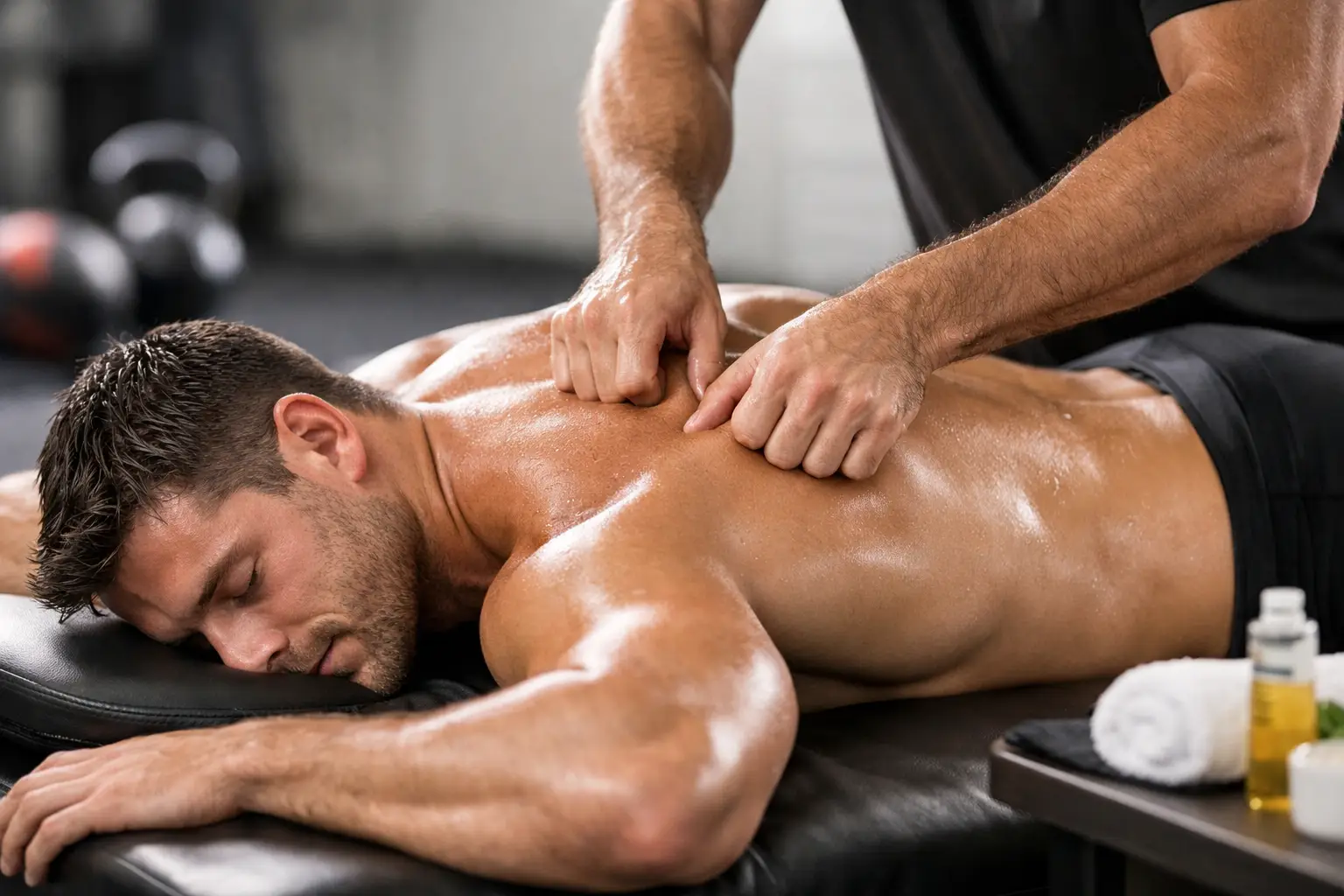
Hard training leaves clues. A calf that never fully loosens after speed work, hips that stop opening up in a deep squat, shoulders that start pulling your mechanics off line late in a session – these are the moments when deep tissue massage for athletes becomes more than a comfort service. Used well, it is a performance tool.
Athletes do not need random pressure or a generic full-body routine. They need treatment that matches training load, movement demands, and tissue quality. A runner with overloaded calves and hip flexors needs a different approach than a soccer player dealing with adductor tightness or a lifter fighting thoracic restriction. The goal is not to chase pain. The goal is to restore cleaner movement, reduce unnecessary tension, and help the body handle work without breaking down.
What deep tissue massage for athletes is really for
Deep tissue work gets misunderstood because the term sounds aggressive. In practice, good treatment is not about going as hard as possible. It is about applying specific pressure to layers of muscle and fascia that are holding excess tone, limiting motion, or contributing to poor mechanics.
For athletes, that matters because tight tissue rarely stays isolated. A stiff ankle can change how you load the knee. A locked-up T-spine can alter overhead position, sprint mechanics, and even breathing strategy under fatigue. Deep tissue massage can help reduce that restriction, but only when the therapist understands how those tissues affect movement and performance.
That is the difference between recovery work and spa-style massage. One is designed around output. The other is designed around relaxation. Relaxation has value, but if you are training four or five days a week, preparing for races, getting back from a strain, or trying to stay durable through a long season, treatment needs a more athletic purpose.
The real benefits athletes notice
Most athletes first come in because something feels tight, sore, or off. What they usually care about is what happens next in training. Can they hit depth again? Does the stride feel cleaner? Can they rotate without guarding? Does recovery between hard sessions improve?
Deep tissue massage can help on all of those fronts, but the benefit depends on timing and context. Done after a demanding training block, it can reduce residual stiffness and improve how tissues tolerate the next session. Used during a maintenance phase, it can keep small restrictions from becoming compensation patterns. During return-to-sport, it can support better motion and reduce protective tension around previously irritated areas.
It also gives useful feedback. Tissue quality tells a story. Some athletes are globally stiff from workload and poor recovery. Others are not actually tight at all – they are unstable, fatigued, or using tension to create control. That is why deep tissue work should not exist in a vacuum. The best results come when manual therapy is paired with movement assessment and corrective strategy.
When deep tissue massage helps most
There are clear cases where this type of treatment tends to work well. Post-training density in the quads, calves, glutes, lats, or pecs often responds well when tissue tone stays elevated longer than it should. Repetitive sport patterns also create predictable problem areas. Runners commonly deal with calves, feet, hip flexors, and lateral hip tension. Field sport athletes often show adductor, hamstring, and ankle restrictions. Lifters usually present with thoracic, shoulder, hip, and forearm density depending on volume and technique.
It is also useful when your movement quality drops before your conditioning does. If you still have engine but your mechanics are getting sloppy because certain tissues will not give you range, manual work can help restore options. The same goes for athletes who sit long hours outside training and then ask their body to switch straight into explosive output.
But there are limits. Deep tissue massage is not a fix for every pain pattern. If tissue is irritated, acutely inflamed, or guarding because of a joint problem, more pressure is not automatically better. Sometimes the right move is lighter work, mobility, stability, load management, or simply not treating the area directly that day.
Timing matters more than people think
A common mistake is getting heavy bodywork at the wrong time. If you schedule an intense session right before a race, match, or max-effort lift, you may feel flat, tender, or less coordinated. Tissue work changes sensation and can temporarily reduce the protective stiffness some athletes rely on for output. That is not always bad, but it has to match the goal.
Before competition, treatment is usually better when it is focused, strategic, and not overly aggressive. Think mobility support, tone regulation, and freeing up key restrictions without leaving the athlete sore. After competition or during heavy training phases, there is more room for deeper recovery work if the body can absorb it.
This is where athletes benefit from working with someone who understands programming. Recovery is not separate from performance. It is part of performance. The bodywork that helps on a deload week may be the wrong choice during a taper or the day before speed work.
How a sports-focused session should feel
A productive session has intent. It starts with questions about training volume, recent soreness, current limitations, and upcoming demands. If your right hip feels blocked, the work should not automatically stay on the right hip. A good practitioner looks at how the foot, adductors, glutes, trunk, and even rib position might be feeding that pattern.
During treatment, pressure should feel purposeful, not chaotic. Some discomfort is normal, especially in dense tissue, but more pain does not mean better outcomes. If you are bracing, holding your breath, or feeling smoked afterward, the dosage may be wrong. The target is change you can use – better range, less guarding, cleaner movement, and a body that feels more prepared rather than beaten up.
At Roman Balaban Massage Therapy & Fitness Training, that performance lens matters. The session is not built around a routine. It is built around what your sport and your body are asking for right now.
Deep tissue massage vs. stretching and mobility work
Athletes often ask whether they need massage or whether they should just stretch more. Usually the answer is both, but not in equal amounts for everyone.
Massage can reduce tissue resistance and improve how an area feels in the short term. That can create a window for better movement. But if you do not reinforce that window with strength, control, or specific mobility drills, the body often returns to the same pattern. On the other hand, some athletes keep stretching tissues that already have enough length and actually need stability and motor control.
That is why the best approach is integrated. Manual therapy opens access. Mobility work teaches the body to use it. Strength training helps keep it. If one piece is missing, results usually fade faster.
How often athletes should get deep tissue work
There is no perfect schedule for everyone. Training frequency, sport demands, injury history, and stress outside the gym all matter. Some athletes do well with occasional sessions around high-load periods or races. Others need more consistent maintenance because they train hard year-round and tend to accumulate restriction quickly.
If you are constantly waiting until pain spikes, you are already behind. Athletes usually get better results when they treat bodywork as part of a broader durability plan rather than emergency care. That does not mean overdoing it. It means using treatment often enough to stay ahead of recurring patterns.
A practical rule is to pay attention to three signs: your recovery is slowing down, your range of motion is getting harder to access, or your movement quality is dropping in ways that repeat. When those show up together, it is usually time to address the tissue before compensation builds.
What athletes should expect after treatment
The best outcome is not just that you feel looser on the table. It is that you move better when you stand up, train, and repeat effort under fatigue. You may feel immediate relief, but the real test is what happens over the next 24 to 72 hours.
You should notice smoother range, less protective tightness, and better awareness of positions that were hard to access before. If the treatment was deeper, some soreness is possible, but it should not feel like your recovery got derailed. Light movement, hydration, and smart training decisions help the body absorb the work.
For serious athletes, deep tissue massage is not about indulgence. It is about keeping tissue quality high enough to train consistently, move efficiently, and avoid wasting output on preventable restriction. If your body keeps giving you the same warning signs, listen early – your next phase of progress often depends on it.
Leave a Reply