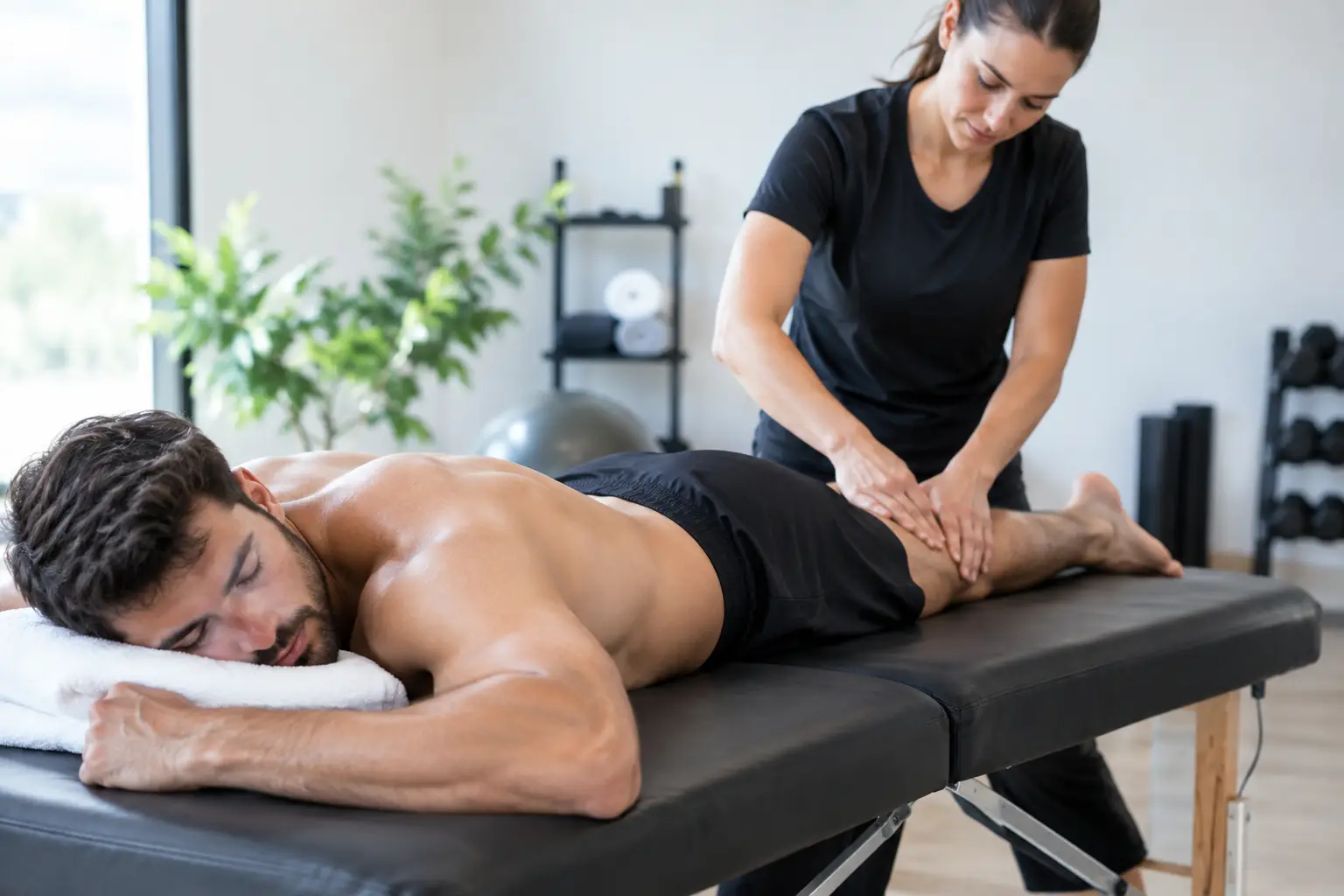
A hard training block can leave an athlete feeling strong but restricted: calves that will not lengthen, hips that stop rotating, shoulders that lose position, or a familiar ache that changes how they move. Can massage improve athletic performance? Yes, when it is used as targeted bodywork inside a complete recovery and training plan – not as a substitute for strength work, smart programming, sleep, nutrition, or medical care.
For athletes, the value of massage is not simply feeling relaxed after a session. The right treatment can reduce perceived soreness, improve short-term mobility, identify tissue restrictions, and help restore movement options that training stress has narrowed. Those benefits can support better-quality training and more consistent performance over time.
What Massage Can and Cannot Do for Performance
Massage is not a direct replacement for conditioning. It will not raise your VO2 max, add strength to a weak hip, fix poor running mechanics by itself, or prepare you for competition if your training plan is inadequate. An athlete who needs more ankle strength, better sprint mechanics, or a stronger trunk still has to train those qualities.
What massage can do is help remove barriers that interfere with training. A runner whose calves are constantly guarded may struggle to load the ankle well. A soccer player with stiff adductors may avoid a full lateral push. A lifter with limited shoulder motion may compensate during pressing and pulling. In each case, bodywork can create a window for better movement. The next step is using that window with corrective exercise, strength training, and sport-specific practice.
This distinction matters. Temporary range of motion without control is not durable mobility. The goal is not to chase looseness. The goal is to give your body enough usable motion, tissue tolerance, and strength to perform under pressure.
Can Massage Improve Athletic Performance Through Recovery?
Recovery is where massage often has its most practical role. Heavy lifting, interval work, long runs, repeated cutting, and hard racquet sports create fatigue and localized muscle soreness. Massage can help athletes feel less sore and less stiff after demanding sessions. That can make it easier to return to normal movement, sleep comfortably, and train with better focus.
The effect is individual. Some athletes respond well to deep tissue work after a high-volume week, while others need a lighter approach because aggressive pressure leaves them more tender. More pressure is not automatically better. A skilled practitioner adjusts the treatment to the athlete’s current workload, sensitivity, injury history, and next training demand.
For a Miami runner training through heat and high mileage, for example, recovery work may focus on calves, feet, hip flexors, and glutes while preserving enough readiness for the next run. For a field athlete, treatment may prioritize adductors, hamstrings, ankles, and rotational hip control after repeated accelerations and cutting. The session should reflect the sport, not follow a generic full-body routine.
Massage can also improve recovery by giving athletes useful feedback. Recurring tightness in one area is rarely random. It may point to limited joint motion, an overloaded pattern, poor warm-up habits, insufficient recovery between sessions, or a strength deficit somewhere else in the chain. Hands-on treatment is valuable when it leads to a better decision about training.
Mobility Is Valuable Only When You Can Use It
A common reason athletes seek massage is restricted mobility. They want to squat deeper, rotate more freely, reach overhead without pinching, or run without feeling like every stride is pulling against a brake. Soft-tissue work, myofascial techniques, assisted stretching, and PNF stretching can improve short-term range of motion for many athletes.
That can be especially useful before a movement session, when the athlete needs access to a position that has become limited by training stress. But the body needs a reason to keep that new range. Strength work and controlled movement are what make it stick.
Pair bodywork with active follow-through
After work on the hips, an athlete may need controlled split squats, lateral lunges, or single-leg stability work. After shoulder and upper-back treatment, they may need pulling strength, overhead control, and breathing mechanics. After ankle mobility work, they may need calf strength, balance, and gradual exposure to running or jumping.
This is why integrated bodywork and coaching matter. The most productive session does not end when the table work stops. It connects the tissue work to the movement pattern that must improve.
Timing Changes the Result
The same massage session can help or hurt readiness depending on when it is scheduled. Deep, aggressive treatment immediately before competition is usually a poor choice. It can leave an athlete feeling heavy, sore, or less sharp, particularly if the area is already irritated.
Before an event, the better approach is typically brief, focused, and activation-oriented. The goal is to improve comfort and movement quality without creating fatigue. Light manual work, dynamic assisted mobility, and sport-specific warm-up drills are usually more appropriate than a long deep-tissue session.
After competition or a demanding training session, treatment can be more recovery-focused, provided there is no acute injury. The goal then is to reduce guarding, restore comfortable motion, and help the athlete shift out of the high-tension state that often follows hard effort.
During an off-season or lower-intensity training phase, deeper work may be appropriate for persistent restrictions, especially when it is followed by progressive strength and mobility training. The athlete has more time to adapt and less risk of disrupting a key performance day.
When Massage Is Not the Right Answer
Massage should not be used to push through serious warning signs. Sharp pain, sudden swelling, bruising, loss of strength, numbness, joint instability, fever, or pain that changes your gait needs proper evaluation. Dry needling, cupping, deep tissue work, and stretching all have a place, but they are not blanket solutions for every problem.
Athletes also need to be honest about the pattern behind recurring pain. If the same hamstring tightness returns every week, repeatedly treating the hamstring alone is incomplete care. The answer may involve sprint exposure, pelvic control, glute strength, workload management, sleep, or a more gradual return to speed.
A performance-focused practitioner should be willing to say when manual therapy is not enough. That protects the athlete from wasting time, masking symptoms, and turning a manageable issue into a longer layoff.
Build Massage Into a Performance System
The athletes who get the most from massage do not wait until they are barely moving. They use bodywork strategically during high-volume phases, after competitions, when mobility begins to limit technique, or while returning from a setback. They also track what changes after the session: Is the squat cleaner? Does the stride feel smoother? Can they rotate, cut, or reach without compensation? Does soreness resolve fast enough to maintain the training plan?
At Roman Balaban Massage Therapy & Fitness Training, that is the standard: hands-on care should connect to movement, training, and a clear performance objective. Deep tissue work, assisted stretching, myofascial treatment, prehab, and gym coaching are tools. The result that matters is a body that can handle more quality work with less unnecessary breakdown.
Massage earns its place in an athlete’s routine when it helps you train consistently, move with better options, and address problems before they become forced rest. Use it with intention, then follow the work with the strength, skill, and recovery habits your sport demands.
Leave a Reply