Your squat depth disappears halfway through a training block. Your stride feels short during speed work. Stairs create a pulling sensation above the knee, and every attempt to stretch your quads produces temporary relief at best. Deep tissue for tight quads can help, but only when the treatment matches the reason those muscles are holding tension in the first place.
For athletes and serious gym-goers, tight quads are rarely just a comfort issue. Restricted quadriceps can change how you load the knee, limit hip extension, interfere with mechanics in sprinting and running, and make lower-body training feel heavier than it should. The goal is not to make the area feel painfully “worked.” The goal is to restore usable motion while keeping you prepared to train.
Why Tight Quads Change Your Movement
The quadriceps are a four-muscle group on the front of the thigh. They extend the knee, absorb force during landing and deceleration, and help control the lower body under load. The rectus femoris also crosses the hip, which means it can affect both knee motion and hip extension.
That matters in nearly every athletic pattern. A runner needs the hip to extend behind the body without excessive low-back motion. A soccer player needs clean knee drive, deceleration, and kicking mechanics. A lifter needs enough knee and hip motion to squat, lunge, and change levels without shifting into compensation.
When the quads stay guarded, the body often finds motion somewhere else. You may arch through the low back at the bottom of a lunge, let the knees drift inward as fatigue rises, or lose stride length because the trailing hip cannot extend well. The tightness you feel is real, but it may be the result of high training volume, inadequate recovery, poor load distribution, limited hip or ankle motion, or a technique issue that keeps asking the same tissue to do extra work.
This is why aggressive pressure alone is not a complete answer. A quad that feels tight after hill repeats needs a different plan than a quad that has been overloaded by poor squat mechanics for months.
How Deep Tissue for Tight Quads Works
Deep tissue work uses deliberate, targeted pressure to address dense, sensitive, or overactive areas in the muscle and surrounding fascia. On the quads, that may include the rectus femoris, vastus lateralis on the outside of the thigh, vastus medialis near the inner knee, and the tissue around the hip flexors and lateral thigh when it contributes to the restriction.
A productive session is not a contest to tolerate the most pressure. Excessive force can make an already irritated muscle guard harder, leave you overly sore, and reduce the quality of your next training session. Effective work is specific: pressure is adjusted to the tissue response, breathing stays controlled, and the therapist checks whether movement actually improves.
At Roman Balaban Massage Therapy & Fitness Training, that means looking beyond the spot that hurts. Quad tension is assessed alongside hip rotation, ankle mobility, pelvic control, knee tracking, and the demands of your sport. Manual therapy is then paired, when appropriate, with assisted stretching, myofascial work, PNF stretching, or corrective strength work.
The immediate result may be a freer-feeling squat, less pulling at the front of the thigh, or easier knee flexion. The more valuable result is better access to a movement pattern you can reinforce in training. Massage can change how tissue feels and how well you move in the short term. Lasting change requires you to load that new range with control.
What a performance-focused session should include
A strong treatment starts with context. What changed in your program? Did the tightness begin after more mileage, sprint volume, leg training, cycling, or a return from injury? Is it worse during activity, after training, or the next morning? Those answers guide the work.
Treatment may move from superficial warming and tissue assessment into deeper work where it is useful. It can include active movement while pressure is applied, followed by assisted hip extension or knee-flexion work to help the nervous system accept the new range. A short retest matters. If your lunge, squat, or stride mechanics do not improve, more pressure is not automatically the solution.
When Deep Tissue Is a Good Fit
Deep tissue can be useful when your quads feel chronically dense after repeated training, when range of motion is limited without a sharp injury event, or when normal recovery work is no longer enough. It is often valuable during high-volume phases, after competitions, or as part of a return-to-training plan once acute symptoms have settled.
It can also help athletes who feel a consistent pull through the front of the thigh during hip extension. This is common in runners, cyclists, field athletes, and lifters who spend long periods in hip flexion, then demand explosive extension from the same area.
Timing matters. A deeper session the day before a race, max-effort lower-body workout, or tournament may not be the best choice, especially if your quads are already sensitive. Lighter recovery work, movement preparation, and a targeted warm-up may serve you better. Deep tissue is usually most useful when there is enough recovery time afterward to let the area settle and practice better movement.
When Tight Quads Need a Different Approach
Not every front-of-thigh problem is muscular tightness. Sharp pain, sudden bruising, swelling, weakness, pain that changes your gait, or a distinct pop during activity can point to a strain or another injury requiring medical assessment. Deep pressure over an acute muscle tear is not productive.
Persistent pain near the kneecap or at the tendon above it also deserves a more careful look. The issue may involve tendon load tolerance, training errors, or knee mechanics rather than a quad that simply needs to be released. In those cases, the plan should emphasize progressive strengthening and smart load management, not repeated painful treatment.
Referral can be appropriate when symptoms include numbness, tingling, unexplained swelling, fever, severe night pain, or pain that continues to worsen despite reduced training. A performance mindset includes knowing when not to push through.
Keep the Quads From Tightening Right Back Up
The fastest way to lose the benefit of bodywork is to return immediately to the same loading pattern with no adjustment. You do not need an hour of mobility drills. You need a few movements that target the reason your quads are doing too much.
After a session, use the available range. Controlled split squats, reverse lunges, step-downs, and light single-leg work can teach the hips, knees, and feet to share load more effectively. If hip extension is limited, a well-executed hip bridge or hip hinge may help you stop borrowing motion from the low back. If ankle restriction is forcing the knees and quads to compensate, ankle mobility and calf strength belong in the plan.
Training volume deserves an honest review as well. Adding sprint work, heavy squats, long rides, and extra running in the same week can overload even good tissue. Recovery is not passive. Sleep, protein intake, hydration, sensible programming, and enough easy movement all influence how quickly the quads return to normal.
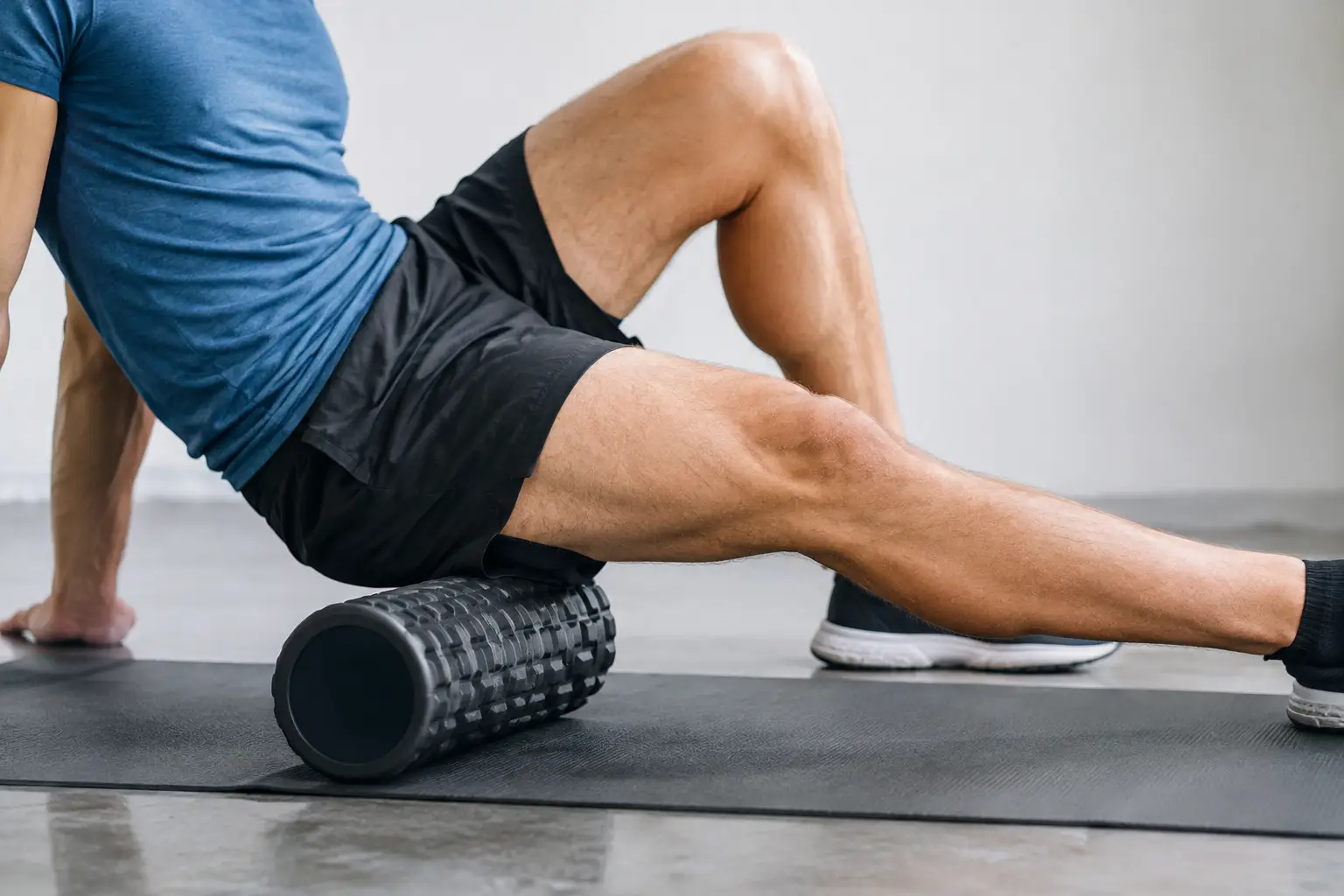
Foam rolling can be useful for brief symptom relief, especially before mobility work, but it should not be your entire strategy. If you need to aggressively roll the same part of the thigh every day just to train, the underlying movement or workload issue has not been solved.
Build Capacity, Not Just Temporary Relief
Deep tissue for tight quads works best as part of a larger performance system. The hands-on work can reduce perceived stiffness and help restore motion. Mobility work can make that motion accessible. Strength training gives your body a reason to keep it.
That sequence is especially useful for active adults who want to train consistently without cycling between tightness, pain, and forced time off. The right approach is not to chase perfect looseness. Quads should be able to produce force, absorb force, and recover from force without becoming the weak link in your next session.
If your quads repeatedly lock up after the same workouts, treat that pattern as useful information. Address the tissue, test the movement, adjust the load, and build capacity where your body needs it. That is how recovery starts carrying over to performance.
Leave a Reply