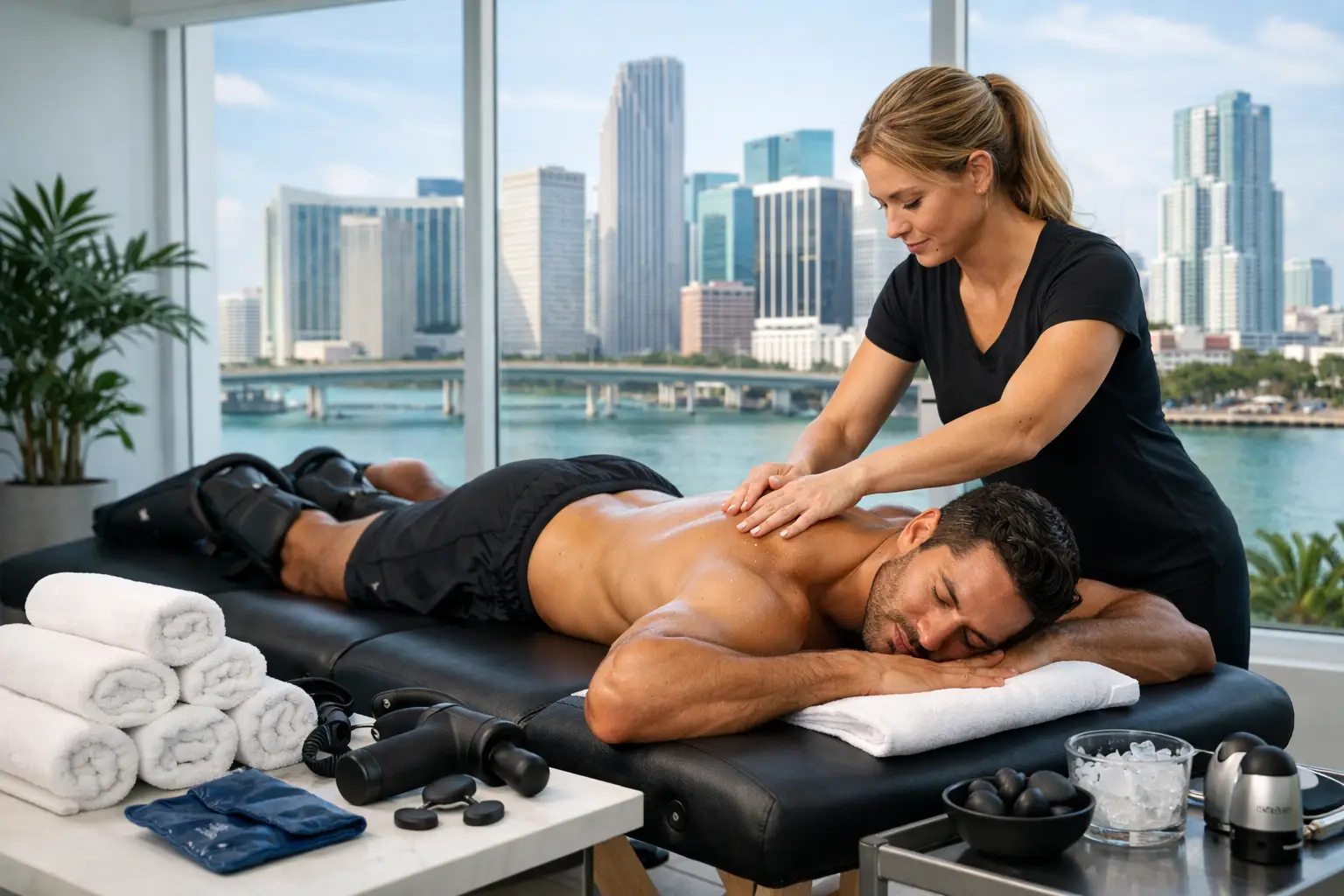
Miami athletes do not usually need another generic massage. They need work that matches training load, movement demands, and the reality of staying ready week after week. Athlete massage in Miami makes the biggest difference when it is built around performance – not relaxation, not vague wellness, and not a one-size-fits-all session.
A runner dealing with hip tightness, a soccer player carrying adductor fatigue, and a lifter fighting shoulder restriction should not be getting the same treatment. Their tissue stress is different. Their movement patterns are different. Their recovery priorities are different. If the goal is to keep training, move better, and avoid the cycle of recurring pain, the session has to reflect that.
What athlete massage in Miami should actually do
For serious training populations, massage is not just about feeling looser for an hour. It should help reduce excessive muscle tone, improve joint freedom through surrounding soft tissue work, and make quality movement easier to access. That can mean opening up ankle mobility for better sprint mechanics, reducing calf and hamstring density after track work, or restoring thoracic and shoulder motion after heavy upper-body training.
The best work is specific. It looks at where tension is limiting output, where compensation is building, and where fatigue is starting to change mechanics. That matters because many athletes do not stop at the first sign of restriction. They train through it. Sometimes that is manageable. Sometimes it turns into overloaded tendons, irritated joints, or movement patterns that keep stealing speed and power.
A strong session should give you two things at once – immediate relief and a clearer path back to efficient movement. If it only relaxes tissue without improving function, the result often fades quickly. If it pushes intensity without regard for the athlete’s current state, it can create more soreness than value.
Not every sports massage is built for athletes
This is where many people waste time. Plenty of services use sports language, but the session itself is still basically a standard massage with a different label. That is not enough for someone who runs, lifts, cuts, jumps, or competes on a schedule.
A true performance-focused session starts with context. What sport do you play? What did you train this week? What feels limited? What movement keeps aggravating the issue? Are you preparing for competition, recovering between hard sessions, or trying to return after a setback? Those questions shape the work.
Treatment should also account for timing. The right approach before a race, game, or intense lift is different from what you want two days after a heavy session. Pre-event work usually aims to reduce stiffness without making tissue feel flat. Post-training recovery often allows for more detailed tissue work, mobility support, and downregulation. Return-to-sport work may need an even tighter connection between manual therapy, strength deficits, and movement retraining.
That is one reason athletes often get better results from a practitioner who understands both bodywork and training. Tissue quality matters, but so does how that tissue behaves under load.
Why integrated care matters more than isolated treatment
If your hip keeps tightening every week, the answer may not be more pressure. If your shoulders always feel beat up after pressing, the problem may not be located only at the shoulder. Soft tissue treatment helps, but lasting progress usually depends on what happens around the table too.
That is where an integrated model stands out. Manual therapy can reduce guarding and improve access to motion. Assisted stretching can help reinforce range. Prehab guidance can address weak links or stability gaps. Strength and conditioning can build the control needed to hold better mechanics under fatigue. Each part supports the others.
For athletes, this matters because recurring issues are rarely random. A calf that always locks up may be connected to ankle restriction, stride mechanics, or poor recovery between sprint sessions. Low-back tightness may be linked to hip control, trunk stiffness, or overloaded hamstrings. Neck and trap tension may reflect breathing strategy, shoulder position, or repetitive upper-body strain.
When care stays isolated, you may feel better but still return to the same breakdown. When treatment and coaching work together, the body has a better chance to change the pattern that created the problem.
Who benefits most from this kind of work
Athlete massage is not only for elite competitors. It is for anyone training with purpose and asking their body to perform consistently. In Miami, that includes runners logging weekly mileage, field sport athletes managing acceleration and deceleration demands, gym athletes chasing strength and hypertrophy, and active adults who train hard enough to feel the cost of accumulated fatigue.
The common thread is not sport level. It is load. If you are stacking training sessions, dealing with repeat tightness, losing mobility as the week goes on, or noticing that one side keeps taking more stress than it should, targeted bodywork can be useful.
It is especially valuable for athletes who tend to ignore small restrictions until they become larger interruptions. A little adductor tension turns into limited stride length. Mild shoulder stiffness changes pressing mechanics. Ongoing calf tightness starts altering ankle behavior and foot strike. Small changes in tissue quality can have a real effect on output when repeated under high frequency.
What a better session may include
A serious athlete should expect more than a routine full-body sequence. The work may include deep tissue massage, myofascial techniques, cupping, dry needling when appropriate, and PNF stretching to help restore usable range. The point is not to use every tool. The point is to choose the right tool for the problem in front of you.
For example, dense quads after repeated sprint efforts may respond well to focused soft tissue work plus stretching that restores hip extension. A lifter with chronic pec and lat restriction may need work that frees up the front of the shoulder and thoracic region, followed by movement coaching so the change carries into training. A runner with stubborn lower-leg tension may benefit from a combination of tissue treatment, ankle mobility work, and practical advice on how to recover between hard sessions.
Pressure alone is not the measure of quality. A more aggressive session is not automatically a better session. Sometimes the body needs targeted intensity. Sometimes it needs precision and better sequencing. Good treatment should challenge the tissue without overwhelming the system.
How often athletes should get massage
It depends on your training volume, injury history, and current goal. Someone in a hard training block or preparing for competition may benefit from more regular sessions. Someone training moderately and moving well may only need periodic tune-ups.
The right schedule is usually based on patterns, not guesswork. If tightness predictably builds after certain sessions, treatment can be timed around that. If you are returning from injury, frequency may be higher at first and taper as movement quality improves. If you only book when pain spikes, you are often managing a problem late instead of staying ahead of it.
There is also a trade-off. More treatment can help during demanding periods, but it should not become a substitute for sleep, smart programming, hydration, and strength work. Massage is one part of recovery strategy. Useful, often highly effective, but still one part.
Choosing the right provider in Miami
If you are looking for athlete massage in Miami, ask better questions before booking. Does the provider understand your sport? Do they work with movement restrictions, recovery demands, and training stress, or do they mainly offer relaxation services? Can they explain why a certain area is being treated and how that connects to function? Do they adjust the session based on your training week?
You also want someone who sees the body as a system, not a list of sore spots. A hamstring complaint may involve the pelvis, glutes, adductors, or foot mechanics. Shoulder pain may involve rib position, thoracic stiffness, scapular control, or how you are lifting. The more performance-driven your goals are, the more this level of reasoning matters.
Roman Balaban Massage Therapy & Fitness Training is built around that standard. The focus is not passive bodywork for temporary relief. It is targeted treatment supported by biomechanics, recovery planning, assisted mobility, and coaching that helps athletes stay durable and keep moving forward.
The best bodywork should help you train with fewer restrictions, recover with less guesswork, and make better decisions about what your body needs next. If your sessions are not doing that, they are probably not built for how you actually perform.
Leave a Reply