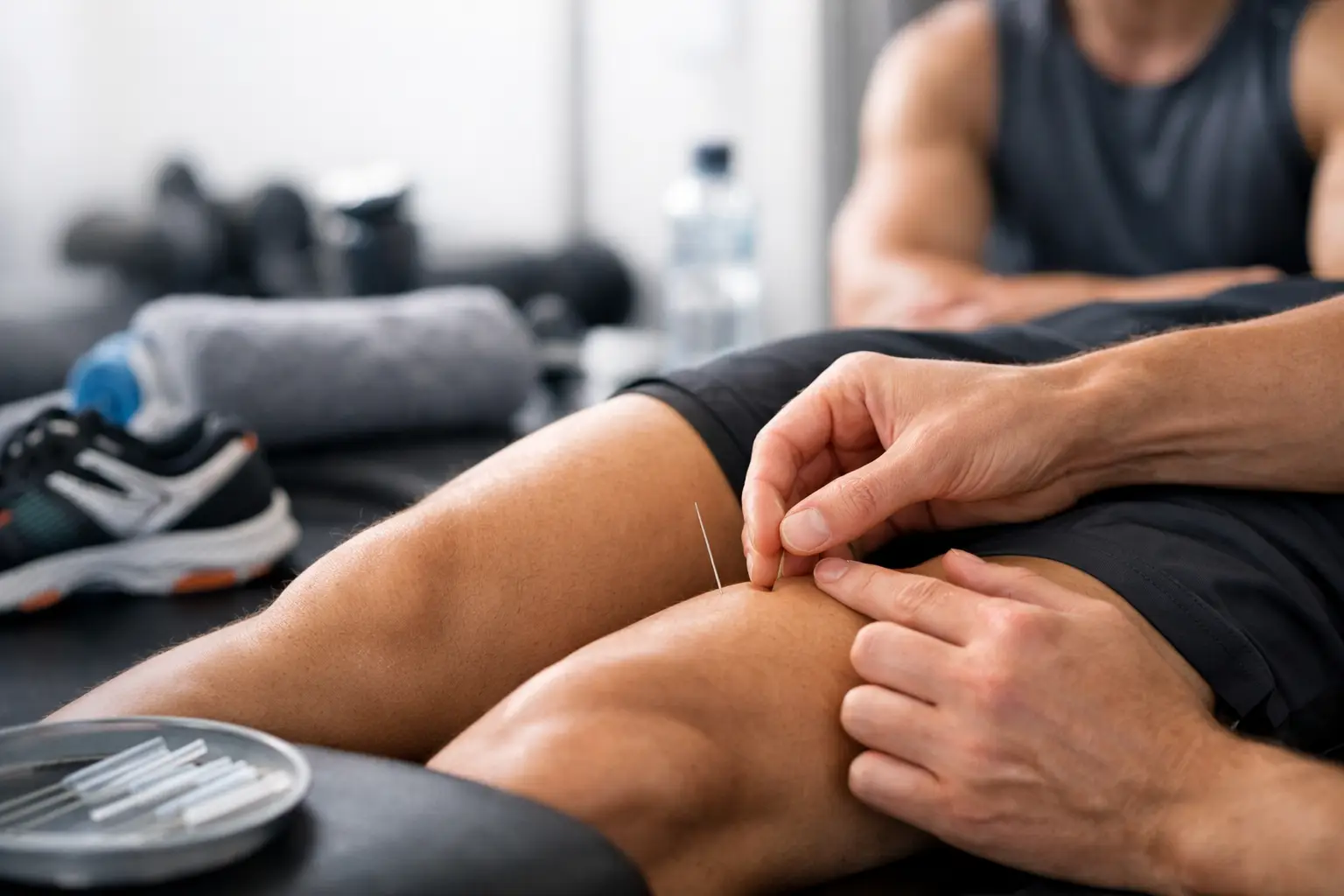
Hard training leaves clues. A calf that stays tight three days after speed work, a shoulder that never fully relaxes after upper-body sessions, a hip that keeps changing your stride – those are not just soreness stories. For many athletes, dry needling for sports recovery is one of the fastest ways to calm overactive tissue, restore cleaner movement, and get back to productive training.
That does not mean it is a magic fix. Dry needling is a targeted tool. Used well, it can help reduce muscle tone, ease trigger points, improve range of motion, and make other recovery work more effective. Used at the wrong time, or without a clear movement plan, it becomes just another treatment that feels productive but does not change much.
What dry needling for sports recovery actually does
Dry needling uses a thin filiform needle to target dysfunctional muscle tissue, especially trigger points and areas of excessive tension. The goal is not relaxation in the spa sense. The goal is to change tissue behavior so the body can move better, tolerate load better, and recover with less compensation.
In a sports setting, that matters because tight tissue rarely acts alone. A stiff hamstring can change hip mechanics. A guarded calf can alter foot strike. A lat or pec that stays switched on can limit overhead position and affect pressing, throwing, or swimming mechanics. When a muscle is holding too much tone, the body often starts working around it. That is where performance drops and repetitive stress starts building.
Dry needling can help interrupt that pattern. In many cases, athletes feel a quick reduction in deep muscle tension, less local tenderness, and better motion right after treatment. The bigger value, though, is what happens next. Once the tissue stops fighting you, it is easier to reinforce better movement through stretching, activation, strength work, and sport-specific mechanics.
When athletes benefit most from dry needling
The best candidates are usually not people looking for passive relief. They are athletes dealing with a specific restriction that is affecting training quality. That might be recurring calf tightness in runners, adductor tension in soccer players, hip flexor stiffness from sprint work, or upper back and shoulder restriction in lifters.
Dry needling tends to work best when there is a clear mechanical reason to use it. If a muscle is tender, shortened, overactive, and limiting joint motion, needling can be a strong option. If the issue is mostly training load mismanagement, poor sleep, low fuel intake, or a technique problem, dry needling may help symptoms without solving the real driver.
That is the trade-off athletes need to understand. A good treatment should answer two questions: what tissue needs to calm down, and why did it get overloaded in the first place? If you only treat the first part, the tension often comes back.
How dry needling fits into a real recovery plan
Dry needling for sports recovery works best as part of a system, not as a standalone event. Tissue quality matters, but so do mobility, strength, timing, and movement control. A muscle that releases well on the table can tighten right back up if the athlete returns to the same poor mechanics under fatigue.
That is why the next step after needling matters. In most cases, athletes should follow treatment with some combination of light mobility work, positional breathing, activation drills, and gradual return to loading. If the hip moves better after needling the glutes or adductors, you want to teach the body how to use that new range. If the calf stops gripping after treatment, you want gait mechanics and lower-leg loading to support the change.
This is where integrated care separates performance work from generic recovery services. At Roman Balaban Massage Therapy & Fitness Training, dry needling is used alongside bodywork, stretching, and coaching so the result is not just less tension, but better movement under load.
What it feels like and what to expect after treatment
Athletes often ask whether dry needling hurts. The honest answer is sometimes. The needle itself is usually not the hard part. The stronger sensation comes when a trigger point responds. You may feel a twitch, a cramp-like ache, or a deep referral sensation through the muscle. That response is often a sign the right tissue was reached.
Afterward, it is normal to feel sore for a day or so, similar to post-workout soreness but more localized. Some athletes feel immediate relief and better mobility. Others feel a little heavy that day and better the next morning. It depends on the tissue involved, how reactive the area is, and how hard the athlete has been training.
For that reason, timing matters. Dry needling the day before a race, heavy lift, or high-intensity field session is not always a smart move. Some athletes handle it well. Others feel flat or irritated for 24 hours. In most cases, it is better scheduled after a demanding block, on a lower-intensity day, or early enough before competition to let the body settle and adapt.
Common areas treated in sports recovery
The most frequently treated regions are usually the ones that absorb repetitive stress. Calves and soleus muscles are common in runners and field sport athletes. Hip flexors, glutes, TFL, and adductors often show up in sprinting, change of direction work, and heavy lower-body training. The upper traps, lats, pecs, and rotator cuff can be major drivers in overhead sports and lifting.
But location alone does not decide treatment. A tight hamstring is not always a hamstring problem. Sometimes it is reacting to pelvic position, glute underperformance, or poor trunk control. Needling the sore area may help, but the better move is to look at the full chain. Athletes usually get the best results when treatment is based on movement assessment, not just symptom location.
Who should be cautious with dry needling
Dry needling is not for every athlete in every situation. If you are highly sensitive to needling, sick, severely sleep deprived, dehydrated, or already carrying a lot of systemic fatigue, your response may be less predictable. Some athletes also bruise easily or simply do not tolerate the sensation well.
It is also not the first move for acute injuries that need a full medical workup, especially when there is significant swelling, loss of strength, joint instability, or sharp pain that changes rapidly. And if your training pain has been persistent for months without a clear diagnosis, treatment should start with a thorough assessment, not just symptom chasing.
Good recovery work is precise. The question is never whether dry needling is good or bad. The question is whether it matches the tissue, the timing, and the athlete in front of you.
How to know if it is working
The standard should be higher than “it felt intense” or “I was sore after.” Effective dry needling should produce a change you can measure. That might mean less pain with sprinting, cleaner squat depth, easier shoulder flexion, better stride symmetry, or reduced post-training tightness over the next several sessions.
If the same area needs treatment every week with no lasting improvement in motion or performance, something is missing. Often that missing piece is load management, strength progression, running mechanics, or recovery habits outside the treatment room. The body usually tells the truth quickly. If treatment helps but the pattern keeps returning, look upstream.
For athletes who train consistently, that is the real value of dry needling for sports recovery. It can create a window where the body is less guarded and more adaptable. But windows close if you do not use them. The right follow-up work turns short-term relief into actual progress.
If you are dealing with recurring tightness, movement loss, or a muscle that never seems to come down after training, the answer may not be more rest. Sometimes the better move is targeted treatment paired with a smarter plan. Recovery should make you more ready, not just less sore.
Leave a Reply