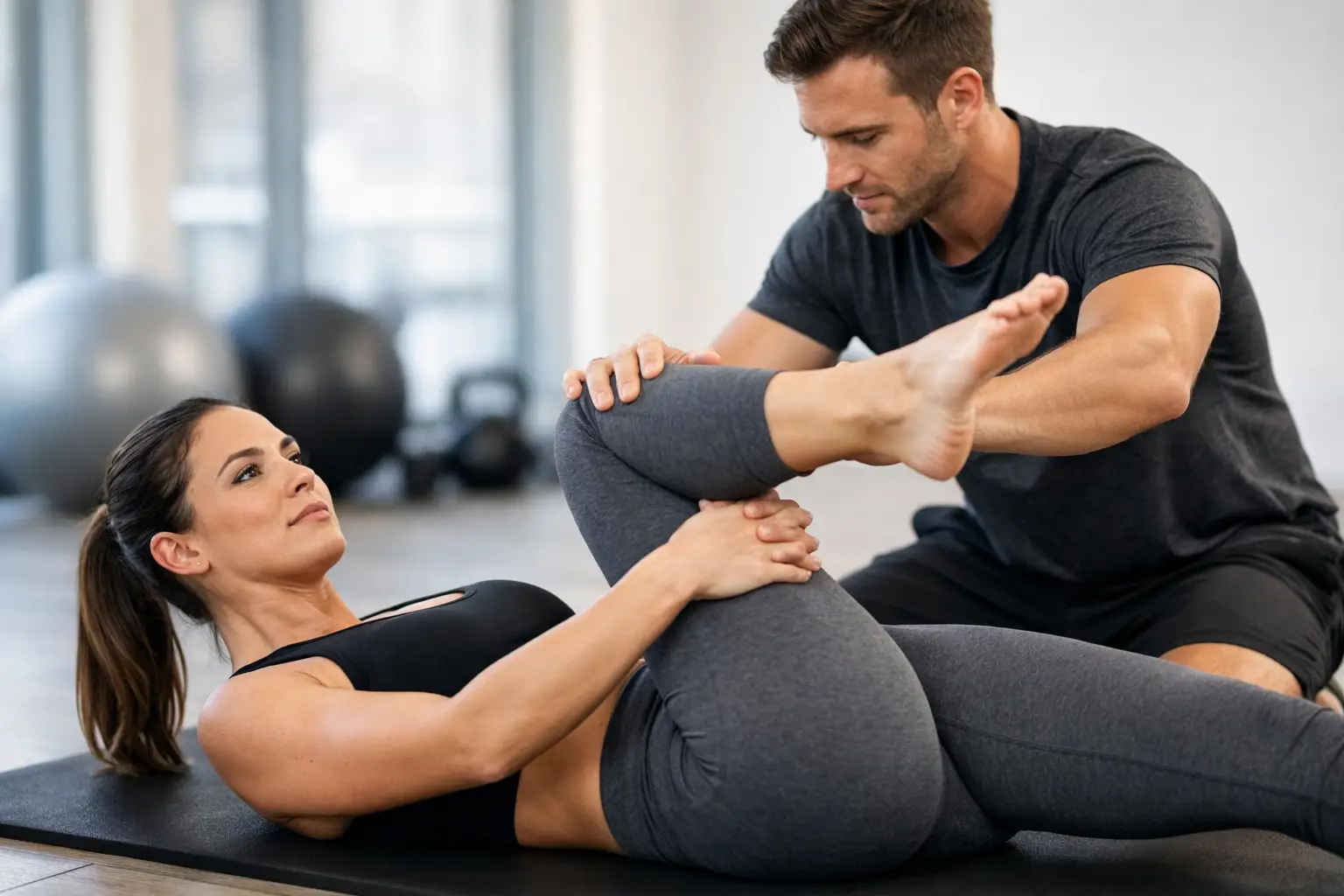
If your hips feel blocked in a deep squat, stiff after speed work, or cranky when you get out of the car, more stretching is not always the answer. PNF stretching for tight hips works better when the issue is not just short tissue, but poor neuromuscular control, high resting tone, or a joint that has forgotten how to move under load.
That matters for athletes and active adults because tight hips rarely stay isolated. They change stride mechanics, limit rotation, alter squat depth, and push stress into the low back, knees, and hamstrings. If you train hard, you need hip mobility that you can actually use, not flexibility that disappears the moment speed or load shows up.
What PNF stretching for tight hips actually does
PNF stands for proprioceptive neuromuscular facilitation. In practical terms, it combines a stretch with an active muscle contraction. The goal is not to force range of motion. The goal is to improve how your nervous system allows movement in that range.
A basic example looks like this: you move into a hip stretch, lightly contract against resistance for several seconds, relax, and then move a little deeper into the stretch. That contract-relax sequence can reduce muscle guarding and give you access to more usable motion.
This is why PNF often works better than passive stretching for athletes. Passive stretching can feel good, but it does not always change the way the body controls the position. PNF asks the muscles around the joint to participate. That makes the result more functional and often more durable.
It is also why effort matters. Too little contraction and you may not get much response. Too much and your body tightens up even more. Most people do best with about 20 to 50 percent effort, not a max contraction.
Why your hips feel tight in the first place
Tight hips are not always caused by short hip flexors. Sometimes the issue is overloaded adductors from sprinting or change of direction work. Sometimes it is high tone in the glutes or deep rotators. Sometimes the problem starts at the pelvis and trunk, where poor control forces the hips to compensate.
Sitting can contribute, but training can too. Heavy squats, cycling volume, field sport deceleration, and repetitive lifting all create specific stiffness patterns. In some athletes, that stiffness is protective. The body is creating tone because it does not trust the available range.
This is where context matters. If you feel pinching in the front of the hip, aggressive stretching may make things worse. If your low back extends every time you try to open the hip, the problem may be positional control, not tissue length. If you have sharp pain, numbness, or symptoms that keep returning, stretching alone is the wrong solution.
When PNF is a good fit
PNF stretching for tight hips tends to help most when the restriction feels muscular, not sharp or joint-like. It is useful when you can reach the position, but the tissue feels guarded and resistant. It is also effective when you want mobility gains that carry over into training.
Athletes often respond well in a few situations. Before lower body training, a brief PNF sequence can improve access to hip extension or rotation. After training, it can help reduce excessive tone in areas that stayed switched on too long. During rehab or return to sport, it can be part of rebuilding clean movement patterns.
It is less useful when you are highly inflamed, acutely injured, or forcing motion into a painful joint. In those cases, treatment should focus on calming symptoms, restoring control, and identifying what is driving the restriction.
The three hip areas that usually need attention
Most people with stiff hips do not need random stretches. They need the right target.
Hip flexors and front of the hip
This area matters for runners, field athletes, and lifters who spend a lot of time in flexion. Limited hip extension can shorten stride, change pelvic position, and increase low back compensation. A contract-relax setup in a half-kneeling hip flexor stretch can be effective, especially if you keep the ribs stacked and the glute lightly engaged.
The mistake is pushing the pelvis forward and arching the back to fake range. If the stretch moves out of the hip and into the lumbar spine, you are rehearsing compensation, not improving mobility.
Adductors and inner thigh
Adductors are often the hidden limiter in lateral movement, deep squatting, and rotational sports. They also tend to stay overworked in soccer, sprinting, and acceleration-heavy training. PNF works well here because these tissues respond to active contract-relax work better than mindless long holds.
A wide-kneeling or side-lunge adductor position can be useful, as long as the pressure stays tolerable and you can keep the pelvis under control.
Glutes and posterior hip capsule
When internal or external rotation is limited, the glutes and deeper posterior hip structures may be part of the issue. This shows up in cutting mechanics, kicking, and squat depth. PNF in a figure-four or seated rotational position can help, but the setup needs to be clean. If the knee is taking stress or the spine is rounding aggressively, adjust the position.
How to use PNF without overdoing it
The best results usually come from short, focused sets. Hold the stretch position, contract for 5 to 10 seconds, relax, and move slightly deeper for 10 to 20 seconds. Two to four rounds is often enough.
More is not better. If you crank on a tight hip for 20 minutes, you can irritate tissue and temporarily reduce force output. That is a bad trade before explosive training. PNF is a tool, not a workout.
Timing matters too. Before training, use lower intensity and fewer rounds so you improve motion without leaving the joint feeling loose or flat. After training, you can spend a little more time if stiffness is limiting recovery. On off days, combine PNF with strength work that teaches the body to own the new range.
That last part is where most people miss the point. New motion is only useful if you can control it. If hip extension improves, follow it with a split squat, march pattern, or bridge variation. If rotation improves, use a controlled drill that loads the position. Mobility that is not integrated tends to disappear.
Common mistakes that keep hips tight
The first mistake is stretching the symptom instead of the pattern. If the hip keeps tightening because your pelvis dumps forward during every lower body movement, the tissue will continue to guard.
The second is using too much intensity. A hard contraction and aggressive stretch often trigger more tension, not less. PNF should feel deliberate, not violent.
The third is ignoring asymmetry. One hip may be limited by adductors, the other by front-of-hip stiffness. Treating both sides exactly the same can waste time.
The fourth is expecting one technique to fix a training problem. If your programming is driving constant overload, or your mechanics keep pushing stress into the same tissues, PNF will help only temporarily.
Where hands-on work and coaching make a difference
Some hips do not need another generic mobility video. They need assessment. You need to know whether the restriction is coming from tone, joint position, overuse, poor sequencing, or a compensation pattern tied to your sport.
That is where an integrated approach works better. Assisted PNF, targeted manual therapy, and movement coaching can change the tissue response and then immediately teach the body how to use the new range under control. For active adults and athletes, that is the difference between feeling looser for an hour and moving better through the week.
At Roman Balaban Massage Therapy & Fitness Training, that process is built around performance, not passive relaxation. The point is to restore cleaner movement, reduce unnecessary tension, and keep you training with fewer setbacks.
How to know it is working
The best sign is not that a stretch feels intense. The best sign is that movement improves afterward. Your squat feels cleaner. Your stride opens up without your low back taking over. Your hip turns better in warm-ups. You finish sessions with less residual stiffness.
You should also notice that the change starts to last longer when PNF is paired with strength and technical work. If the hips feel good only on the table or only right after mobility work, the job is half done.
Tight hips are usually a message, not just a local problem. Treat the restriction, but also respect what the body is protecting. When you combine PNF with good positioning, smart loading, and sport-specific movement, mobility stops being random maintenance and starts supporting real performance.
Leave a Reply