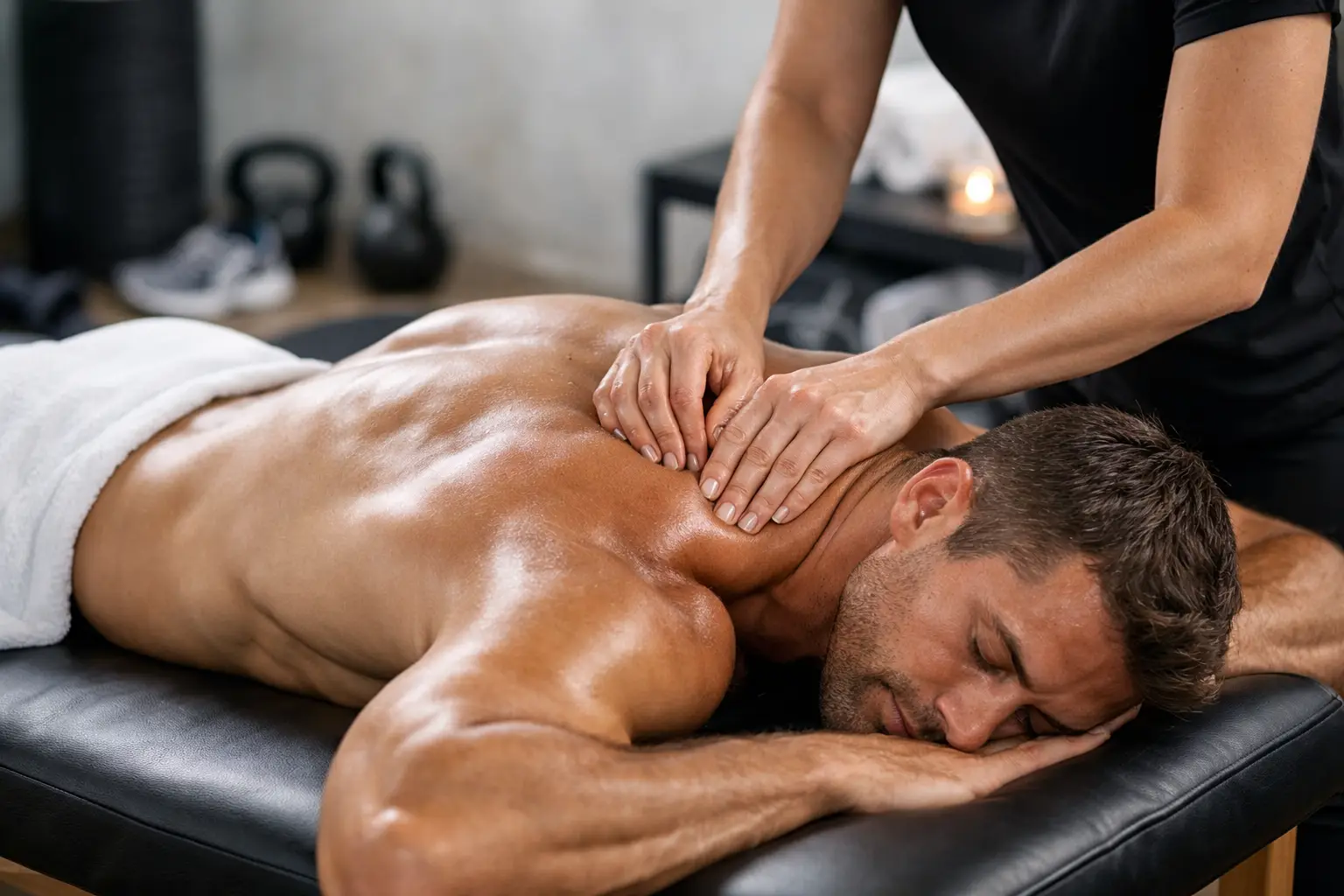
A hard training week usually leaves clues. Your stride shortens. Rotation feels restricted. The calf that was “just tight” starts changing your mechanics. That is where deep tissue massage athletes rely on earns its value – not as a luxury, but as a tool to keep movement efficient and training on schedule.
For serious lifters, runners, field sport athletes, and active adults, recovery is not just about feeling better for a day. It is about restoring tissue quality, reducing unnecessary tension, and making sure one overloaded area does not force compensation somewhere else. Deep tissue work can help with that, but only when it is applied with a clear performance goal.
What deep tissue massage for athletes is really for
A lot of people hear “deep tissue” and think pressure. That misses the point. For athletes, the goal is not to chase pain or leave a session feeling beaten up. The goal is to improve how tissue behaves under load, how joints move, and how the body tolerates training volume.
That means a good session is targeted. If a runner has limited ankle motion because the calves and soleus are guarding, the work should address that restriction and what it is affecting upstream. If a tennis or racquetball player is losing thoracic rotation and overusing the shoulder, the treatment should reflect the demands of that pattern. Random full-body pressure is not the same as sports-focused tissue work.
Done well, deep tissue massage can reduce excessive muscle tone, improve local circulation, and make it easier to access quality movement. That does not automatically make someone faster or stronger. What it can do is remove some of the friction that keeps good training from happening.
Where deep tissue massage athletes benefit most
Athletes usually do best with deep tissue work when there is a specific reason for it. Heavy legs after repeated sprint sessions, hip stiffness that changes squat depth, recurring upper back tightness from combat sports or desk posture layered onto training – these are practical cases where hands-on work can help.
The biggest benefit is often not pain relief alone. It is restoring options. When tissue restriction limits range, changes timing, or creates a pull on surrounding structures, performance starts to get expensive. You can still train, but the quality drops and the body finds workarounds.
Deep tissue massage helps most when it is used to support one of three outcomes: better recovery between sessions, improved mobility in the ranges an athlete actually needs, or reduced stress on overloaded tissues that are absorbing too much work. That is why context matters. A soccer player in-season, a sprinter peaking for competition, and a recreational lifter pushing volume all need different treatment timing and intensity.
Recovery is not the same as sedation
A common mistake is treating athletes like they need to be calmed down at all costs. Sometimes they do need downregulation. Sometimes they need precise work that clears restriction and gets them ready to move better within 24 hours.
The best sports massage approach respects the training calendar. If an athlete has a major session tomorrow, aggressive work that creates soreness may be the wrong call. If they are in a deload week or addressing a chronic issue that has been limiting mechanics for months, deeper and more disruptive work may make sense. It depends on the goal and the timing.
What it can help with and where the limits are
Deep tissue massage is useful, but it is not magic. It can help relieve muscle tension, improve short-term range of motion, reduce the feeling of stiffness, and support recovery from accumulated workload. For athletes dealing with recurring tightness in the calves, hip flexors, glutes, adductors, lats, pecs, or forearms, it can be a strong part of a recovery plan.
It also has limits. If poor movement quality, weak tissue capacity, bad programming, or lack of sleep is driving the problem, massage alone will not solve it. You cannot manually treat your way out of training errors forever.
That is why the best results usually come when bodywork is matched with corrective exercise, mobility drills, strength work, and load management. If a hamstring keeps tightening because the pelvis is unstable, the ankle is restricted, or sprint volume is poorly managed, hands-on treatment may help temporarily but the issue will keep coming back.
This is also why athletes tend to do better with a practitioner who understands both tissue work and movement. The session should not end with “see how you feel.” It should give you a clearer picture of what changed, what still needs work, and how to train around it.
How deep should deep tissue massage be?
Not as deep as your ego wants.
There is a stubborn belief in sports settings that more pain means more benefit. In reality, excessive pressure can make tissue guard harder, leave you overly sore, and interfere with performance if the timing is wrong. Productive deep tissue work feels specific and purposeful. It can be intense, but it should not feel random or reckless.
A skilled therapist adjusts depth based on tissue response, training status, and the area being treated. Quads and glutes can usually tolerate more pressure than smaller, more sensitive structures. The same athlete may also need different pressure week to week depending on fatigue, inflammation, and competition demands.
If you cannot relax enough to breathe through the work, if the body is fighting the pressure, or if you leave a session moving worse than when you came in, that is not a badge of honor. It is usually a sign the dose was off.
When athletes should book it
The best time depends on what you need from the session. If the priority is recovery after heavy training, deep tissue work often fits well later the same day or within the next 24 to 48 hours, depending on soreness and schedule. If the goal is improving mobility before a technical phase or lifting block, it can be useful earlier in the week so there is time to integrate the change.
Right before competition is a different story. Some athletes respond well to light, focused work that reduces stiffness without creating fatigue. Others do worse with deeper inputs too close to game day or race day. Pre-event work should sharpen readiness, not test tolerance.
For chronic restriction, consistency matters more than waiting until things flare up. Athletes who only book bodywork when pain gets loud are usually already behind. A better strategy is using treatment proactively when training load rises, when movement quality starts to slip, or when an old problem begins to reappear.
What a performance-focused session should include
A sports-based deep tissue session should start with questions that matter. What are you training for? What feels restricted? What patterns aggravate it? When did it start changing your output?
From there, treatment should focus on the tissues and chains that actually connect to the complaint. Then comes the part many generic massage sessions miss – checking the result. Did hip extension improve? Is rotation cleaner? Does the athlete squat, hinge, reach, or run with less compensation?
In a high-performance setting, bodywork works best as one part of a system. That may include assisted stretching, myofascial work, dry needling, cupping, PNF, activation drills, or strength coaching depending on the athlete and the problem. Roman Balaban Massage Therapy & Fitness Training is built around that model because athletes do not need isolated services. They need recovery and movement strategies that fit the way they actually train.
Deep tissue massage athletes in Miami should look for
If you are training hard in Miami, heat, hydration demands, field volume, court time, and year-round activity can create a different recovery challenge than seasonal athletes face elsewhere. That makes service quality matter. Look for a provider who understands sport demands, not just muscle knots.
The right practitioner should be able to explain why they are treating a specific area, how it relates to your movement, and what to do next. If the session feels generic, the results usually are too. Athletes need treatment that matches their sport, their workload, and the stage of training they are in.
The real standard: does it improve training?
The best measure of deep tissue work is simple. Do you move better afterward, recover faster, and handle training with fewer setbacks? If yes, it is doing its job. If it only leaves you sore and temporarily relaxed, it may not be the right approach or the right timing.
Athletes do not need recovery theater. They need methods that help them stay durable, keep quality high, and perform under pressure. Deep tissue massage has a real place in that process, but only when it is used with intent.
Choose treatment the same way you choose training – based on function, response, and results. Your body will tell you very quickly whether the work is helping you compete, or just helping you feel like you did something.
Leave a Reply